Once a niche product, pet insurance policies have increasingly gone mainstream, and there are more options, too.
Freelance writer Daniel Bortz and his wife, Alexandra, signed up for pet insurance for their mini goldendoodle, Penny, after their breeder provided them with a month’s coverage for free. After learning how pet insurance works, Bortz bought a policy from Trupanion, a major provider.
“Penny has had a couple of ear infections so far — her breed is prone to getting them — but our main concern was an emergency,” Bortz says.
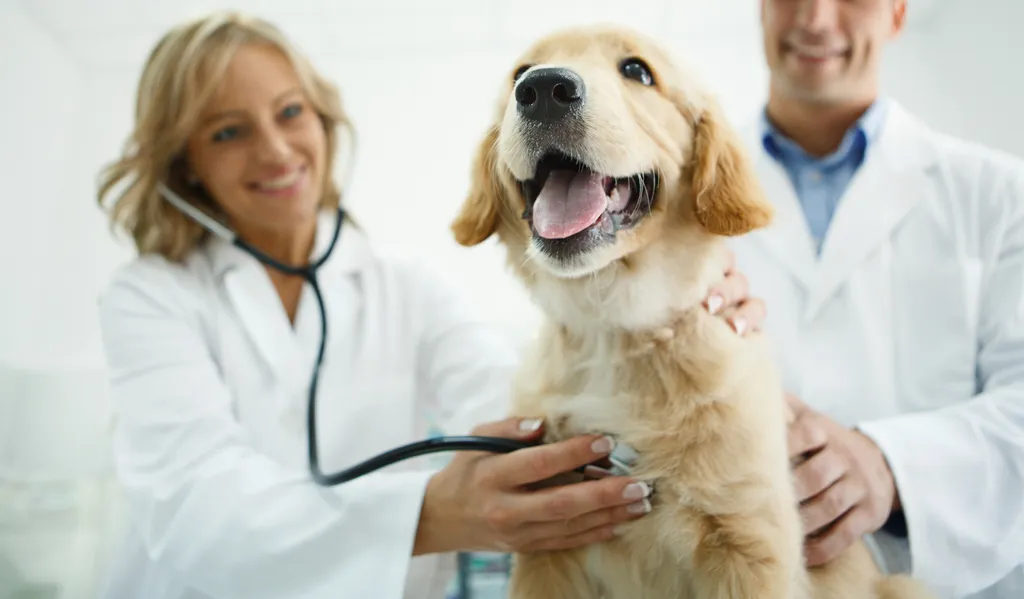
“The advances in veterinary medicine have been phenomenal,” says Rob Jackson, cofounder of Healthy Paws Pet Insurance and Foundation. “There’s hardly a thing that we can’t do for our four-legged family member.”
But comprehensive coverage isn’t the only option for pet parents, and premiums can vary depending on geography and other factors. Here’s how pet insurance works and what to consider when comparing policies.
Just as you can pick a health policy that best matches the needs of you or your family, you can also select one that’s a good fit for your pet. Pet owners can typically choose from three types of coverage: accident and illness, accident-only, and wellness plans.
Accident and illness pet insurance
Accident and illness pet insurance is the most comprehensive type. As the name implies, it covers treatment related to accidents, such as getting hit by a car or eating something toxic. But it also covers illnesses, such as allergies, ear infections or cancer.
Dog owners Sara Babb and her husband, Brandon Trimble, of Arlington, Va., discussed the benefits of pet insurance after adopting Phoebe, a poodle mix.
“Brandon was afraid that if Phoebe got really sick, he would make an emotional decision and spend $20,000 for care,” Babb says.
The couple decided on an accident and illness policy from pet health insurer Figo. Premiums for the first year were $213.
Babb and Trimble bought insurance while their dog was still young and healthy. That’s a smart move. If you put off buying insurance until your pet is older (or adopt an older pet), you might not be able to get some illnesses covered because most policies exclude pre-existing conditions.
However, that doesn’t necessarily mean you should rule out insurance altogether.
“Even if, for example, your dog has a pre-existing kidney condition, there are literally dozens of other scenarios that could be covered—cancer, emergency surgery for a GI (gastro-intestinal) obstruction, getting hit by a car and ear infections,” says Jennifer Fitzgerald, CEO of Policygenius.com, an insurance comparison site.
Age and health aren’t the only things underwriters consider. Your animal’s breed and your ZIP code will also factor into how much you’ll pay in premiums.
Accident-only pet insurance
If you want to save on pet insurance without giving up all coverage, you can lower premiums by opting for accident-only coverage. Your pet will still be covered for accidents, but you’ll pay for treatment related to illnesses yourself.
According to the North American Pet Health Insurance Association, the average cost of an accident-only policy for a dog was $204 in 2023; cat owners paid an average of $116 for accident-only coverage.
Wellness plans
Wellness plans tend to cover preventive-care visits, such as routine vaccinations, and you can buy one as a stand-alone policy or as an add-on to an accident and illness policy.
The most popular policies are accident and illness plans, says Ashlee Tilford, managing editor of Insurance.com and proud owner of Allie, a lab-hound mix.
Many veterinary clinics also offer wellness plans. You’ll usually pay for these up front in annual or monthly installments. They’re a great way to keep compliant with all shots and checkups, while also saving money on basic services.
Before signing on any dotted line, make sure you know your policy’s deductible, reimbursement percentage, annual limit and other key details.
Deductibles
Pet insurance deductibles range from $100 to $1,000 and, as with human health insurance, the lower the deductible, the higher the premium.
You should also determine whether the deductible is applied on an annual basis or a per-incident basis. Per-incident deductibles need to be paid in full for each incident, as you typically do for car insurance or home insurance. An annual deductible only has to be met once for the year, similar to health insurance.
If your finances and your pet are in pretty good shape, a per-incident deductible might be your best option because you might not be visiting your vet often and the policy is usually a bit cheaper. However, if your pet is a serial ribbon eater, opt for a policy with an annual deductible.
Reimbursement percentage
Even if you have pet insurance, you’re expected to pay for services at the time of treatment, then apply for reimbursement of covered costs.
Reimbursement rates start as low as 70% but can go up to 90% of the cost of treatment.
After you’ve paid for treatment and the claim is approved, the insurer will pay that percentage of your vet bill, minus any deductible.
Say your dog swallows a toy while playing. The vet must perform surgery to remove it, resulting in a $3,000 bill. If you’ve already met your deductible for the year and opted for 90% reimbursement rate, your insurer would reimburse you $2,700 for the emergency visit.
Annual limit
Once you decide which type of deductible your finances can handle, compare insurers’ annual limits or maximum policy payouts. This refers to the maximum amount the insurer will reimburse in a given year.
These caps on the amount they’ll pay might also be based on an annual or per-incident basis. Suppose, for example, your cat eats a lot of yarn, requiring four surgeries in a year.
The insurance company might put a cap on coverage after the second incident, because you might have exceeded the per-incident amount, says Claudine Sievert, a doctor of veterinary medicine in Manhattan, Kansas, and a consultant for CatPet.club, a cat enthusiast website.